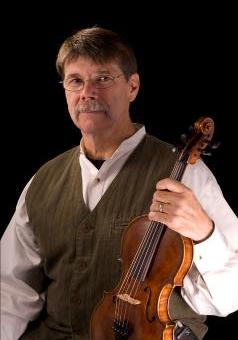
About Barry Dudley

One day, in the early 70's, I walked into the shop of a Master Luthier named Wade Lowe. I had no idea that walking into his shop was going to have such a dramatic effect on my life. Wade was busy at his work bench carving the headstock for a guitar he was building.

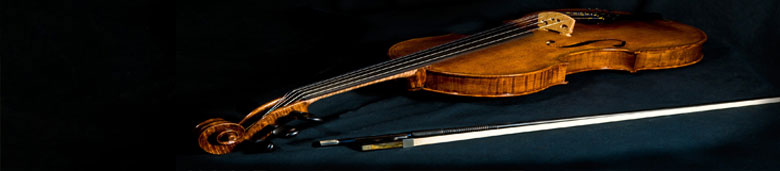
At that moment in time it dawned on me that instruments didn't just appear in retail shops…they were made by someone. Some are made in factories on an assembly line and a very few are lovingly made by the hands of a craftsman. It was then that I decided I want to make violins and guitars.

It was many years before I was able to fulfill my dream and build my first guitar. When it was finished I located Wade Lowe and showed him the creation he had inspired me to build so many years before.

Since that time Wade has become my “Maestro” and close personal friend. He has spent many hours teaching me not only about guitars but also how to make violins and craftsmanship in general.

I attended classes with one of the Top American violin makers, Michael Darnton. Michael is a Master Luthier based in Chicago and is experienced in working with some of the most famous violins ever made. www.darntonviolins.com

The 5-sting violin design I use came from John Silakowski. He has provided a lot of direction and details to make this 5-string design very successful.

Musical instruments are "the brush and canvas" that musicians use to create their musical masterpieces. I am a “so-so” musician but I can build great instruments that allow talented musicians to bring joy to all that hear them.


About Instrument Construction

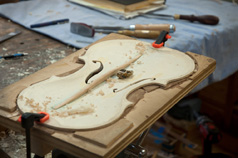
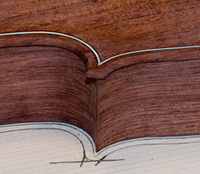
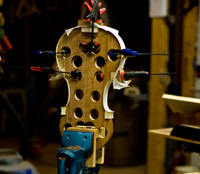
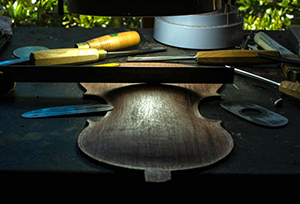
All of my Violins and Guitars are made by hand in my shop. I use hand tools for the majority of the construction process. I do use some power tools in the stock preparation but chisel, finger planes and scrapers do 90% of the work. Of course it is much more involved than these few photos can show.

Violin Construction

Factory made instruments are made using computers to control saws and routers to carve the soundboard, back and scroll. They are built on predetermined thicknesses and graduations. Hopefully it will be the correct thickness for that piece of wood. A violin maker will carefully select the wood and will graduate it based on the characteristics of that specific piece of wood to obtain the rich full sound that handmade instruments produce. view pictures

Guitar Construction

Again just as with building a violin, the guitar maker works with the wood to achieve the most from the pieces of wood he has selected. Much attention is paid to how stiff the wood is and how much it weighs. Mass and weight affect the frequency at which the wood will vibrate. Generally you want the wood to be very stiff and very light. A luthier will constantly check the stiffness and weight as he is thinning the wood. He will hold it up and lightly tap on it to listen to the sound it makes. Does it ring clear and bright or muffled and muddy? Instrument made on an assembly line do not receive this “tuning” process.